 Image 1 of 5
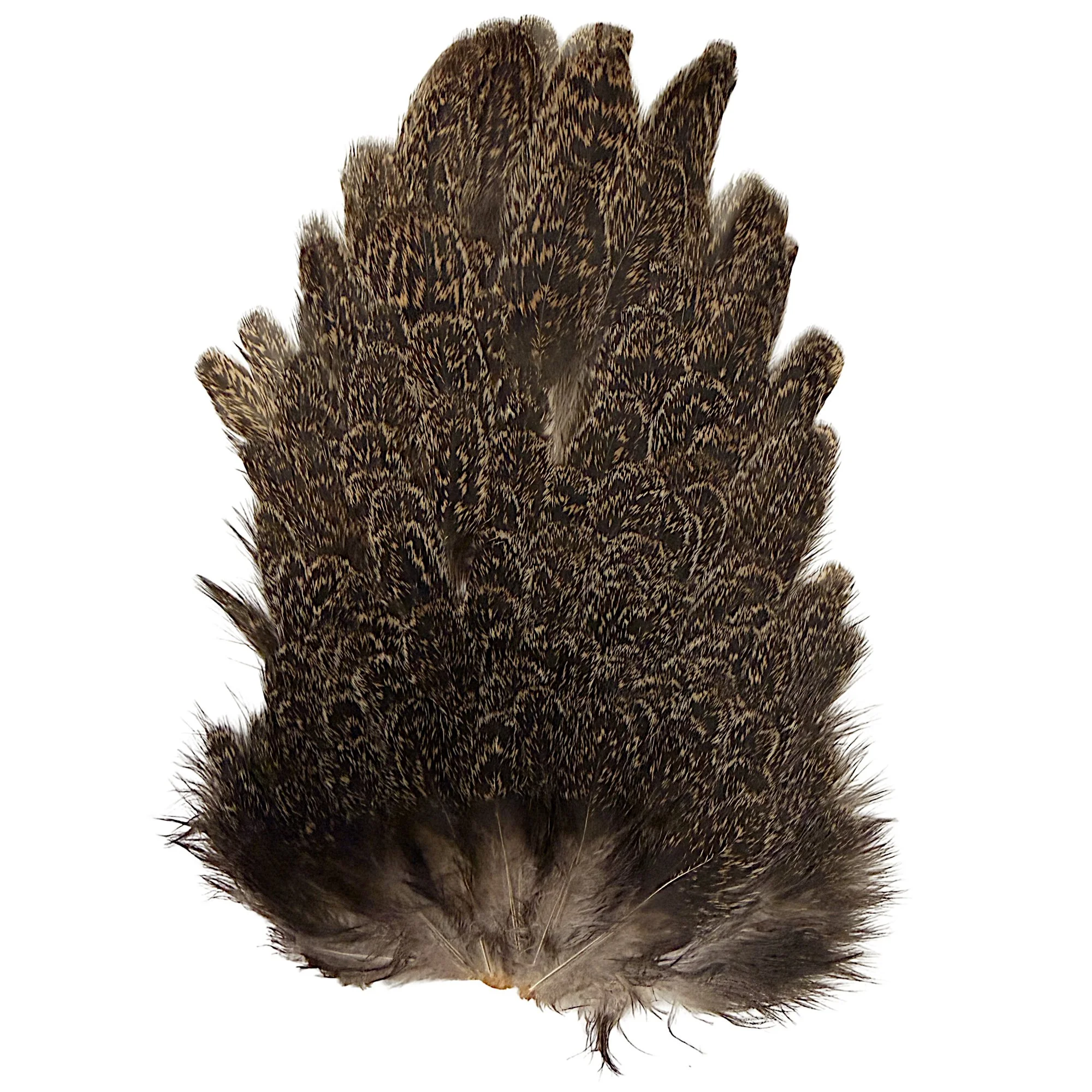 Image 2 of 5
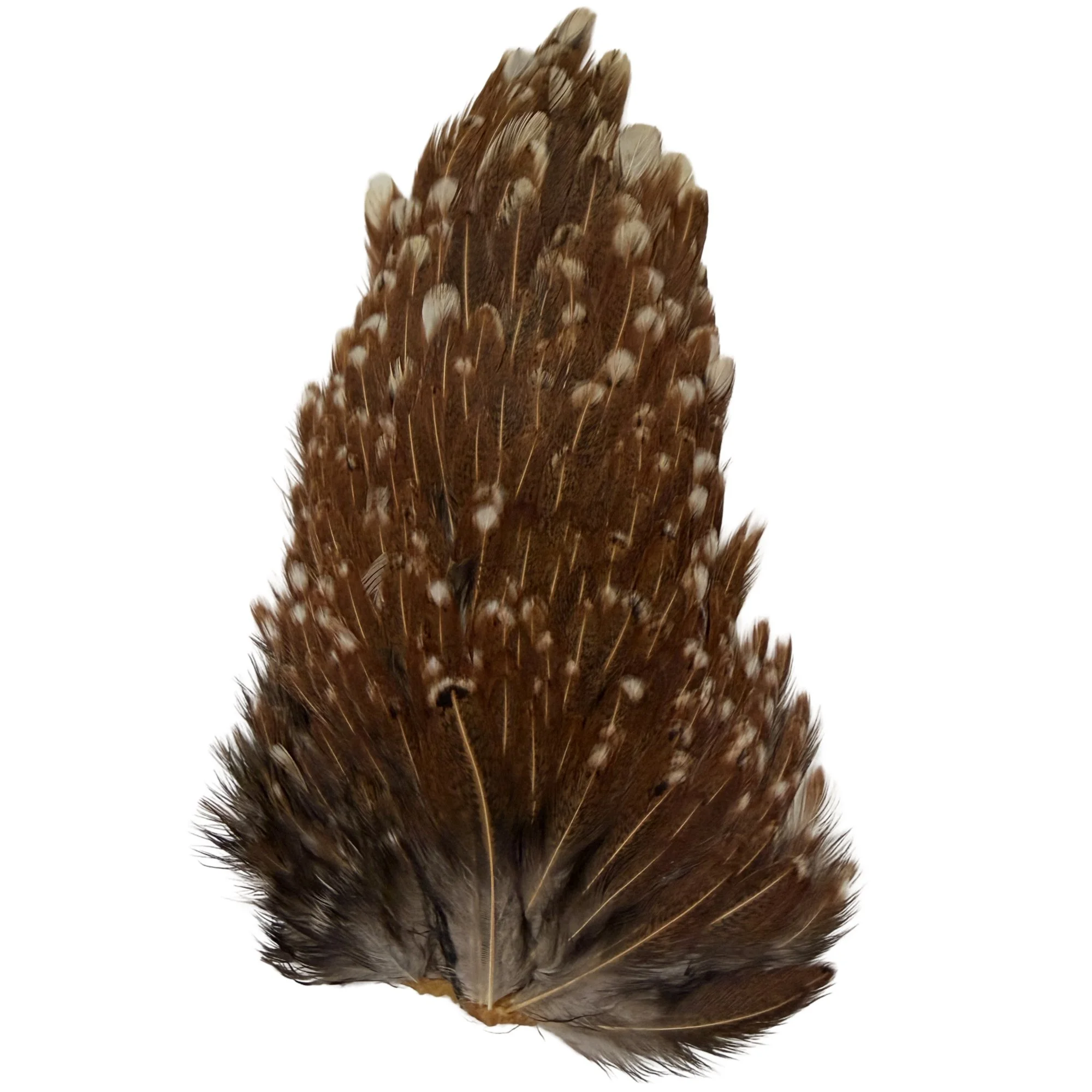 Image 3 of 5
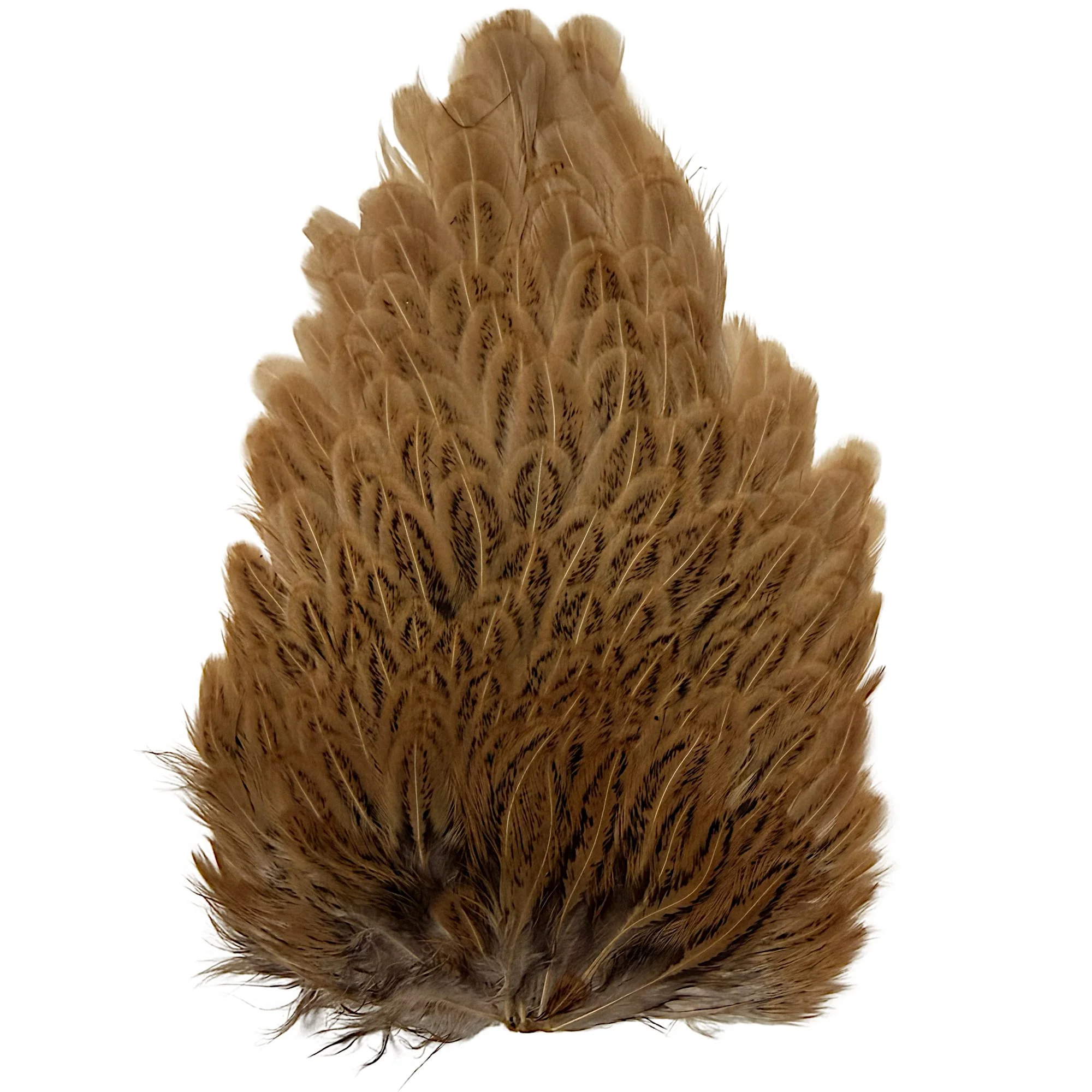 Image 4 of 5
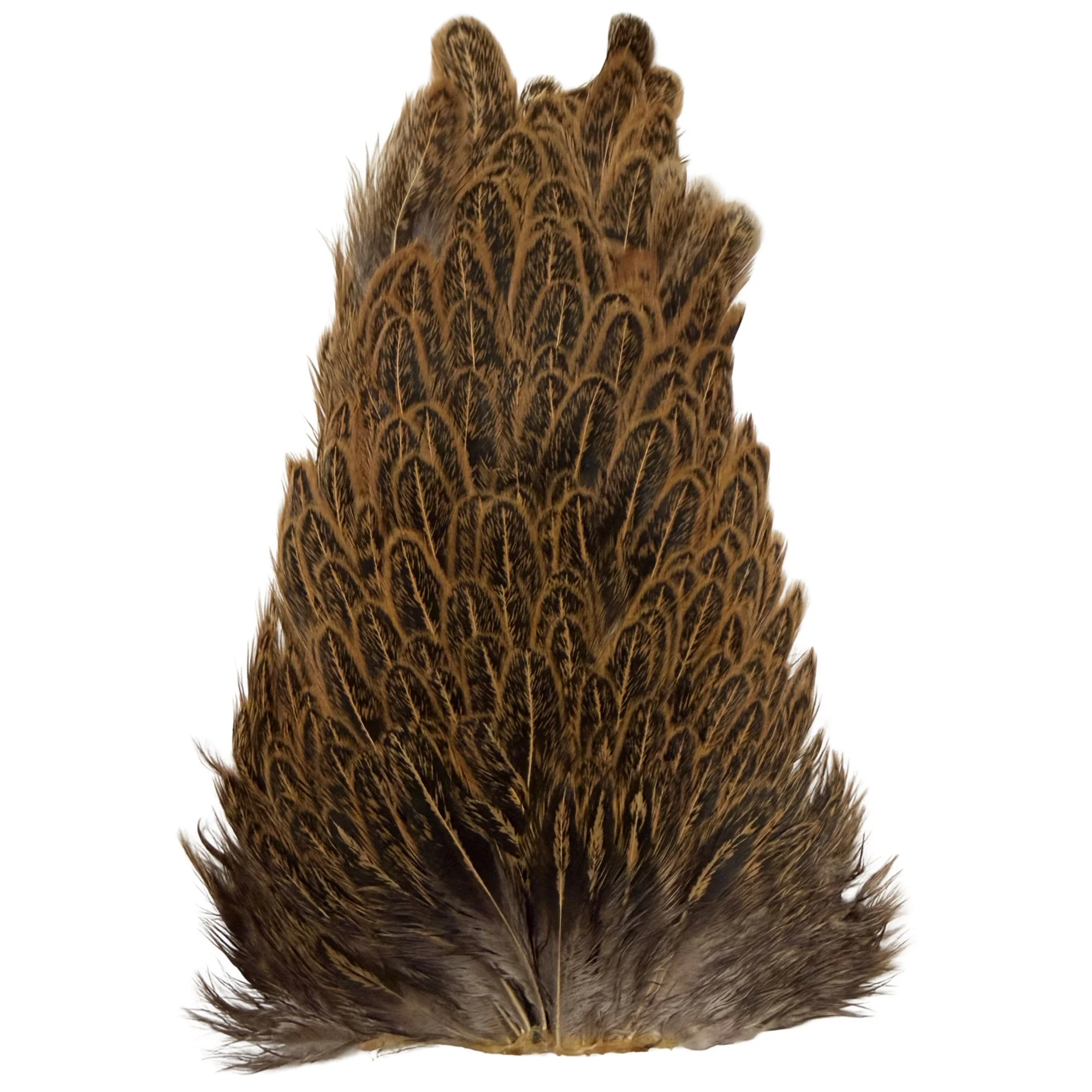 Image 5 of 5
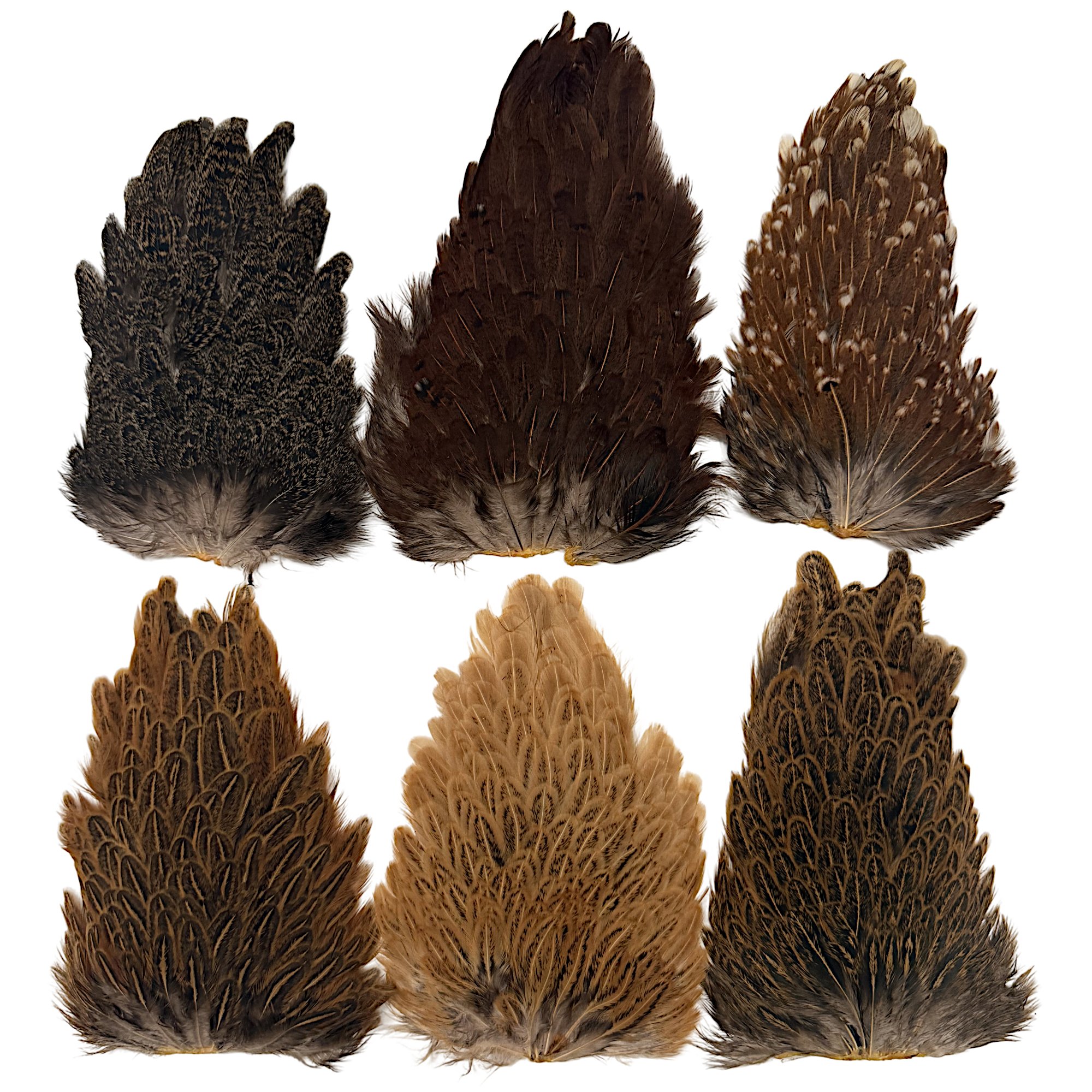
Indian Speckled Hen Backs - Mixed Colors
Speckled hen back feathers are used mainly for soft-hackle and wet-fly patterns. Their fine, flexible fibers move naturally in the water and create a mottled, life like appearance.
Common uses include:
Soft-hackle collars: Tie the feather by its tip and wind it around the thorax to form a sparse, mobile hackle.
Wet-fly wings and hackle: The speckling imitates mottled insect wings, legs, or general natural coloration.
Nymph legs and tails: Small fibers can be used for subtle movement and segmentation.
Wing cases: Wider sections of the feather can be tied over nymphs, especially when a mottled back is desirable.
Streamer cheeks or throat hackle: The contrasting speckles add attraction to bait fish patterns.
Quill-style bodies: Some sections can be stripped or wrapped to create a patterned body, though hen feathers are generally softer and less durable than rooster feathers.
Indian Speckled Hen Backs - Mixed Colors
Speckled hen back feathers are used mainly for soft-hackle and wet-fly patterns. Their fine, flexible fibers move naturally in the water and create a mottled, life like appearance.
Common uses include:
Soft-hackle collars: Tie the feather by its tip and wind it around the thorax to form a sparse, mobile hackle.
Wet-fly wings and hackle: The speckling imitates mottled insect wings, legs, or general natural coloration.
Nymph legs and tails: Small fibers can be used for subtle movement and segmentation.
Wing cases: Wider sections of the feather can be tied over nymphs, especially when a mottled back is desirable.
Streamer cheeks or throat hackle: The contrasting speckles add attraction to bait fish patterns.
Quill-style bodies: Some sections can be stripped or wrapped to create a patterned body, though hen feathers are generally softer and less durable than rooster feathers.